
Below, we discuss two recent policy updates from the past week(s) and analyze them for you. The first is SEBI’s Relief to Corporations in their ESG declarations, and the second is Lessons India can derive from Argentina’s economic crisis and their recovery. Let’s go!
Analysis #1: India relaxes ESG reporting: Is it necessity or conviction?

Remember that collective sigh when your professor or manager extends a deadline?
Feels great, doesn’t it? That’s exactly the mood in boardrooms across India after SEBI extended the ESG reporting deadline for listed companies.
But before we proceed, let’s understand ESG first.
Think of ESG as a corporate report card, grading companies not just on profits and revenue but also on their responsibility towards the Environment, Society, and Governance. It’s the government’s way to include societal good in the way companies operate.
ESG, as a term, was first used in a UN report in 2004 and made it to India’s boardroom discussions when the Ministry of Corporate Affairs introduced a voluntary ESG guideline in 2009. Within 3 years, the top 100 companies began to file their Business Responsibility Reports (BRRs) in 2012, which was soon expanded to the top 500 companies by 2016. This framework was expanded to become Business Responsibility and Sustainability Reporting (BRSR) in 2021 and was expanded to the top 1000 companies as a voluntary framework, and became mandatory from FY 2023-24.
And now the latest one. Last week, SEBI just gave businesses a breather, pushing mandatory ESG reporting from FY 2024-25 to FY 2025-26. Until then, compliance remains voluntary instead of the current "comply-or-explain" model. This is the reason for the smiles in the boardrooms.
But why the extension? Well officially, SEBI cites global challenges in accessing clear and accurate data across complex value chains. From raw material sourcing to factory audits, businesses worldwide struggle with incomplete information.
Legit? Partially.
Here’s what we think:
Geopolitics at Play: India’s rejection of the COP29 final agreement (Read Policy Mandala #11) signals resistance to bear disproportionate costs of sustainability pushed by developed nations. It marks the tough choice of developing countries like India, between economic growth and climate change, hinged on geopolitical realities.
Economic Realities: With a Q2 GDP dip (Read Policy Mandala #12) and lower-than-expected growth, strict ESG mandates might be economically burdensome right now. Hence, delaying it makes the government more business-friendly.
Competitive Edge: In the global manufacturing race, India must appear business-friendly, aligning ESG rules with softer mandates, aligned with major Southeast Asian competitors. This keeps India in the race to attract manufacturing investments.
However, to look at the bigger picture, this delay also offers companies time to prepare while nudging value chain partners to adopt ESG principles. It also highlights the delicate balance India must strike: pursuing green growth without compromising developmental priorities.
So, is India’s ESG approach driven by necessity, conviction, or a mix of both? The answer will shape our role in the global sustainability narrative. Stay tuned!
Analysis #2: Argentina: When Economic Dreams Turn into Nightmares
Messi—ring a bell? The legendary footballer.
Messy—ring another bell? The adjective for chaos.
Well, Argentina, home to Messi, is currently dealing with a rather messy economic situation.
Okay, bad joke. We see it now. Moving on.
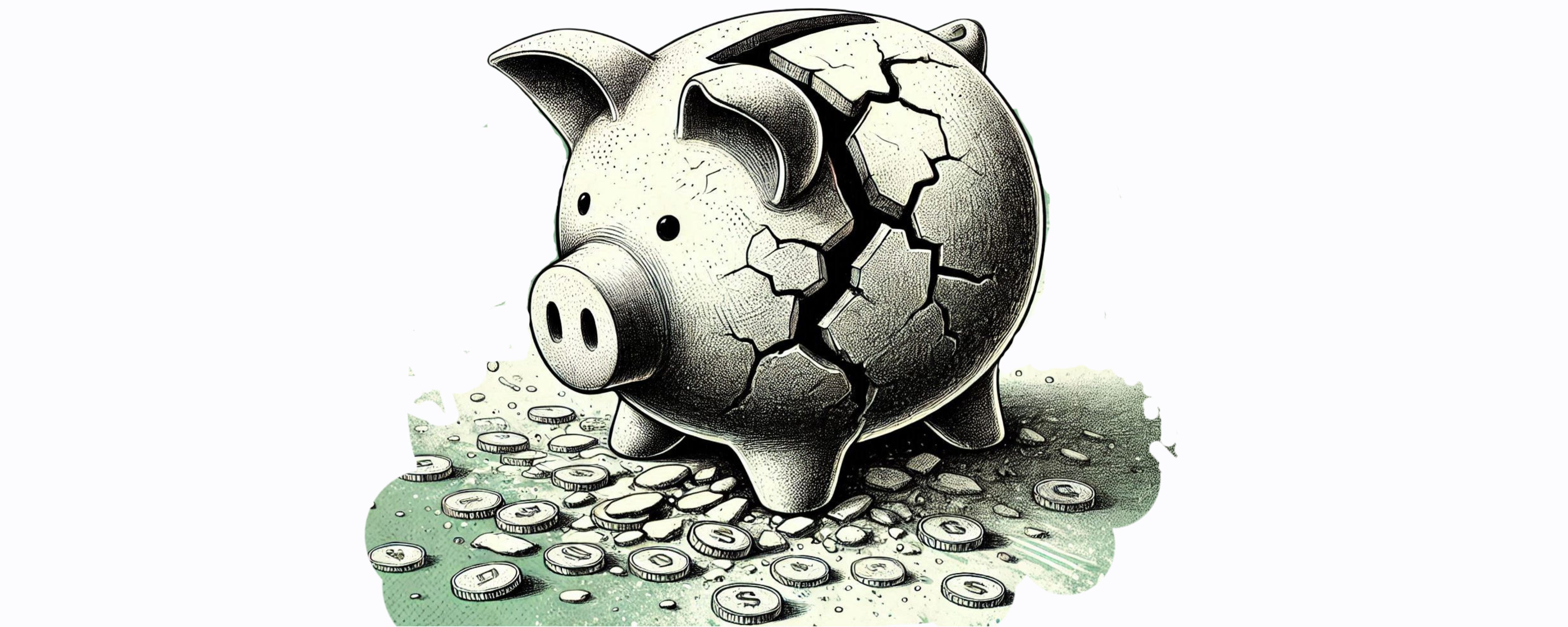
From being a global economic superstar in the 1920s, with a GDP on par with France and Canada, Argentina now faces grim realities: 40% of its population lives in poverty, and inflation crossed 200% in December 2023.
That’s when Javier Milei took over as the President of Argentina. He had promised radical economic reforms and campaigned with a literal chainsaw to symbolize his overhaul plans. Milei pushed bold initiatives: cutting government spending, dollarizing the economy, and privatizing state enterprises. Critics called it "shock therapy," but fans hailed him as a saviour.
And guess what? It’s starting to work. Monthly inflation dropped from 26% in December 2023 to just 2.7% by October 2024. World leaders took note: Donald Trump called Milei his “favourite president,” and Georgia Meloni praised his reforms. Even Trump’s re-election gave Argentina’s stock market a boost, signaling investor optimism in benefitting from a friendly US President. Seems like Argentina is on a path of recovery.
From being a rich nation a century ago to the economic downturn to recent successes, Argentina’s story is a masterclass in both what to do and what not to do.
On the cautionary side, reckless public spending in Argentina led to fiscal chaos, highlighting the need for India to balance election-driven welfare promises with fiscal discipline. We have covered this in our Policy Mandala #10. Also, focusing solely on GDP growth, as Argentina once did, masked deeper issues of inequality and poverty, and India must prioritize equitable, job-rich, and sustainable development if it wants a peaceful social order. Thirdly, inflation spiraling out of control eroded savings and trust in Argentina, underscoring the importance of maintaining the RBI’s independence and adhering to inflation-targeting policies. Similarly, frequent currency devaluations wreaked havoc on the Argentine peso, serving as a reminder for India to safeguard the rupee through robust foreign reserves and investor confidence.
On the positive side, Milei’s bold reforms—emphasizing minimum government and privatization—are showing signs of success. India could draw lessons here, pushing for more decisive reforms and moving further away from state-controlled corporations. However, it’s essential to note that India’s economy is far more diversified, resilient, and globally integrated than Argentina’s. While these lessons are valuable, India’s economic trajectory requires tailored, balanced approaches.
Argentina’s cautionary tale reminds us that proactive governance, fiscal discipline, and robust institutions are non-negotiable. For India, it’s not just about growing the economic pie; it’s about ensuring systems are in place to manage growth sustainably, both economically and socially.
Complacency in the Economy is the real enemy—because even the most promising economies can stumble if they rest on their laurels. Hope Indian Policymakers, both present and future, are taking notes ;)
Book Mandala
In this section, we suggest a book to be read/listened each week, for the inner policy enthusiast in you :)
Book: Not Just a Civil Servant
Author: Anil Swarup
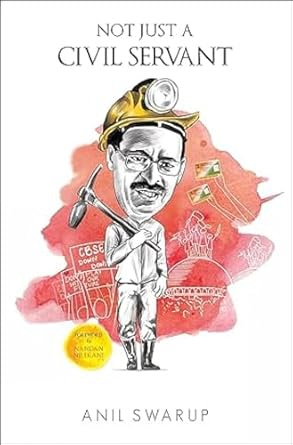
About Book: Not Just a Civil Servant is a memoir by senior bureaucrat: Anil Swarup Ji, that offers an insider's perspective into the Indian bureaucracy. The author served as the Coal and Education Secretary in the Government of India, and through a series of narratives, the author has chronicled his experiences, shedding light on the complexities, challenges, and triumphs encountered during his distinguished career. The book delves into the multifaceted roles of a civil servant, providing readers with an authentic glimpse into the workings of the Indian administrative system.
Our Take: Strongly recommended for anyone interested in understanding the inner workings of the government, this book offers an engaging and insightful experience for the readers. Anil Ji's storytelling resonates as a candid conversation with a seasoned colleague, where he has shared candid reflections. This memoir is a valuable resource for current and aspiring civil servants, serving as an insider’s guide to the challenges and triumphs inherent in the life of a bureaucrat.
Hope you liked today’s Policy Mandala!
We believe nation-building needs a community of changemakers—so we’re creating Bharat Mandala, an ecosystem for impact. Be part of our journey here!
Here's the reality of life in Argentina after a year of Milei's merciless chainsaw and deregulation https://www.aljazeera.com/news/longform/2024/12/7/a-year-into-javier-mileis-presidency-argentinas-poverty-hits-a-new-high
Widespread poverty. Currently at 53% of the population (was 25% before Milei took office). Homelessness and hunger exploding. Misery for the majority, bonanza for the ultra-rich.
65% say their income is much lower than before Milei (32% say it's higher). 64% say economy and quality of life is much lower than before Milei. 63-65% say education, transport, food security are in a worst state than before Milei.
His support base is the ultra-rich and men over 60.