
Analysis Mandala: Deepening Policy Understanding
Below, we discuss one recent policy update from the past week(s), and analyze them for you: Let’s go!
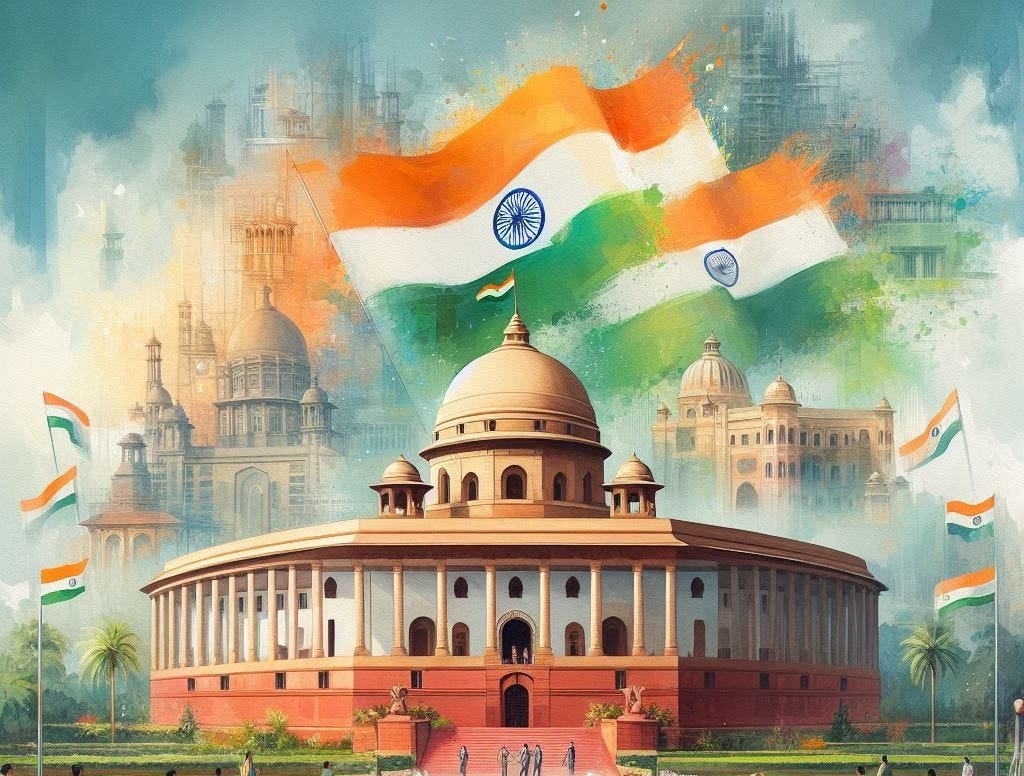
Imagine you're planning your family’s yearly budget: sorting fixed expenses, setting aside emergency funds, and maybe, just maybe, finally taking that long-overdue vacation. Now, scale that up to a national level and get the annual government budget. It’s not just about numbers; it’s a roadmap of the country's priorities and ambitions. And, we just saw the government unveil it for 2025-26 earlier this month.
While the Great Indian Middle Class cheered tax cuts and the US government saw some Trump-requested (read: threatened or warned) custom rate reductions, finer details on schemes and policies got buried in the headlines. So, here we are!
Well, this time the government is betting heavily on Paani, Makaan, Naukri, Bijli and Sadak, i.e. water, housing, employment, electricity and roads! So, in this edition of Policy Mandala, we’ve picked the five key schemes that received major funding boosts, offering clues on where the government’s focus lies. Let’s unpack them one by one!
1. Jal Jeevan Mission:
The government just gave the Jal Jeevan Mission a 195% budget hike to ₹67,000 crores. Launched in 2019, the mission aimed to provide tap water to rural households and has covered nearly 80% so far. Originally set to wrap up in 2024, it’s now extended to 2028 (If only our deadlines were this forgiving!). Why? Because the last 20% is always the hardest—just like those last two kilograms at the gym!
Turns out, for the last two years, the revised estimates have been 30% lower than the allocated budget. Why? Probably, execution challenges. We estimate three big reasons for the same:
Water Quality: Tap water isn’t always safe water. Groundwater contamination in Punjab, Rajasthan, and West Bengal (Deadly ones like Arsenic and Fluoride!) means many still can’t drink what comes out of their taps. Our dream policy would be to add water quality as an objective of Jal Jeevan Mission.
Availability: Some taps exist, but water doesn’t. Some areas in Rajasthan, for example, have pipelines but no steady supply due to issues with the sourcing of water. A fancy tap with no water? Just a wall decoration! Our dream policy would be to put a tracker on the availability of water as a benchmark in the Jal Jeevan Mission.
Sustainability: Pipelines alone don’t ensure water security. Sustainable groundwater management and local community involvement are crucial. Right now, it’s a top-down government scheme, but without ‘jan bhagidari’ (public participation), long-term success seems like a pipe dream—literally. Our dream policy would be to see a Swacch Bharat Mission-style community participation. Jalyukt Shivar, a government policy from Maharashtra offers a model for this.
Factoring in external factors like climate change and industrial demand, the challenge only grows. Will the government rethink its approach in the extended deadline or just keep patching leaks? Our dream is the earlier one, and we hope the government is listening!
2. Pradhan Mantri Awas Yojana (PMAY):
PMAY’s budget has jumped 64% to ₹78,126 crores. Launched in 2015, PMAY set out to tackle India’s housing shortage by ensuring a pucca house (concrete house) for every eligible household. Originally meant to end in 2022, then 2024, it’s now three years behind schedule. But let’s be honest—delays and Indian construction go hand in hand.
This funding boost is critical as housing prices in major cities have soared—Delhi-NCR saw a 32% spike last year! But more money doesn’t automatically mean smoother execution.
Rural Delays: In states like Bihar, Kerala and Maharashtra, funds arrive late, leaving houses unfinished. Some beneficiaries have had to pitch in their own money—defeating the purpose of a subsidy.
Urban Affordability: Can this scheme keep up with skyrocketing real estate prices? A bigger budget helps, but without fixing execution hurdles, the dream of "Housing for All" remains just that—a dream.
3. Employment Generation:
The government is doubling down on jobs with a 194% funding hike—₹20,000 crores for the New Employment Generation Scheme. The kicker is that the New Employment Generation Scheme isn’t officially recognized yet, and last year’s allocation remains a mystery (Is it in a secret government vault?) But we believe these include the Employment Linked Incentives (ELI) launched last year, which incentivises employers and employees to encourage job creation in the formal sector but is yet to be operationalized. We will wait to see how this budget header gets utilized.
What we do know is that India’s youth needs 1-1.2 crore jobs annually, but Citigroup estimates we’re generating only 80-90 lakh per year. If all goes well, the ELI expects to generate about 2 crore jobs in the next 2 years. But if past employment schemes struggled due to red tape, would this one be different? That’s the billion-rupee question.
4. PM Surya Ghar Muft Bijli Yojana:
This scheme’s budget jumped 80% to ₹20,000 crores, aiming to install 1crore rooftop solar panels by 2027. Sounds great, but reality check:
Subsidy Delays: Many states report slow subsidy disbursement, discouraging participation. Hopefully, the government’s experience of at-scale deployment like the Ujjwala and Ujala schemes will come in handy to solve this crisis.
Grid Integration Issues: Some areas don’t have the infrastructure ready to handle decentralized solar power right now, making energy generation inefficient.
The intent is strong and progressive, but execution hurdles remain. Because installing panels is one thing—ensuring they actually power homes is another!
5. Rural Roads:
The Pradhan Mantri Gram Sadak Yojana (PMGSY) also got a 31% boost to ₹19,000 crores. Rural connectivity is a proven economic driver, improving access to education, healthcare, and markets. While this increase is promising, infrastructure projects in India often suffer from cost overruns and delays. Let’s hope these roads don’t take as long to complete as metro projects in some cities (we’re looking at you, Bengaluru!).
Overall, This budget signals a clear push for infrastructure, clean energy, and employment—all crucial for long-term stability, development at the grassroots and creating ground for economic growth of the nation. But budgets alone don’t transform economies. Bold allocations signal great intent. Execution will signal capability. And India needs both.
The real test, as we know well as policymakers, will be on Execution. More money is great, but it will require fixing systemic inefficiencies and tracking the outcome indicators well. Don't worry, we at Policy Mandala will be around to track this in the coming days!
But now, over to you—what do you think about the budget this year?
Note: All the hikes have been calculated against the revised estimates of 2024-25.
Book Mandala
In this section, we suggest a book to be read/listened to each week, for the inner policy enthusiast in you :)
Book: How India Scaled Mt G20: The Inside Story of The G20 Presidency
Author: Amitabh Kant
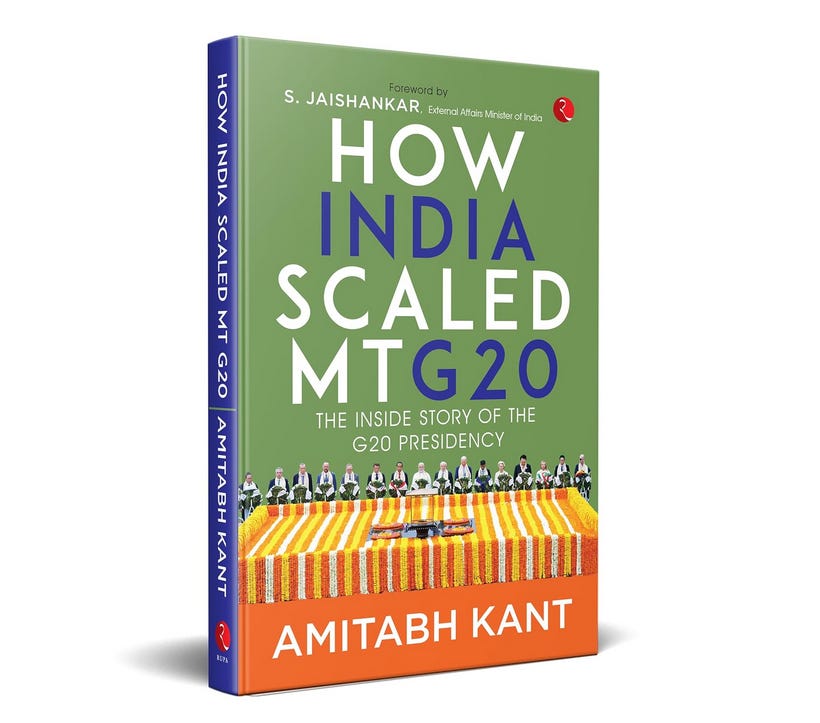
About the Book:
"How India Scaled Mt G20: The Inside Story of the G20 Presidency" by Amitabh Kant offers a deep dive into India's leadership during its G20 presidency in 2023. As the country’s G20 Sherpa, Kant provides an insider’s account of the intricate diplomacy, high-stakes negotiations, and strategic moves that shaped the summit. The book takes us into the deep intricacies of organizing summits, negotiating tough deals, and keeping stakeholders happy, and highlights India's push for amplifying the voices of Global South nations.
Our Take:
Amitabh Ji’s work is both a memoir and a strategic analysis.
The book is a compelling read for those interested in diplomacy and global governance. As a highly acclaimed bureaucrat and author, his writing is simple, and deep and breaks down complex negotiations into an engaging narrative, offering a behind-the-scenes look at how India navigated challenges and emerged as a key player in global decision-making. The book does not shy away from discussing both the delights and the difficulties faced during the summit, adding depth to the narrative. Overall, it’s an insightful read that underscores India’s growing diplomatic influence and its ability to lead international discussions effectively.
Hope you liked today’s Policy Mandala!
We believe nation-building needs a community of changemakers—so we’re creating Bharat Mandala, an ecosystem for impact. Be a part of our journey here!
Thanks for reading Policy Mandala! Subscribe for free to receive new posts and support our work.