
Imagine two vibrant nations: India, home to juicy Nagpur oranges and sturdy Ludhiana bicycles, and Indonesia, famous for its Batik textiles and tropical seafood. For years, they’ve traded oranges for tuna without much fuss.
But one fine day, when India tries selling its bicycles in Bali, alarms go off—“What about our own small cycle industry?” And when Indonesia tries exporting its Batik shirts to India, Surat’s textile industry isn’t too pleased either.
So, both countries pull out a familiar play: tariffs—those trade tolls that add a little price bump to protect homegrown goods.
Now, a Batik shirt in Mumbai? Pricier than it needs to be. An Indian bicycle in Bali? Suddenly not such a bargain. These taxes are like tolls on the global trade highway, making imported goods expensive and thus less preferred, and thus making it difficult for foreign countries to export them.
Then comes a moment of diplomatic warmth—perhaps over masala chai and fried fish at a regional summit. Leaders from both sides wonder, “Why not make trade smoother?” Enter the Free Trade Agreement (FTA)—a pact to reduce or remove tariffs and let goods, services, and investments flow with fewer hurdles.
Simple in theory. But if you’ve heard farmers in Punjab worry about foreign dairy, or read headlines on how ASEAN deals impact local businesses, you know FTAs come with fine print—and fireworks.
In this edition of Policy Mandala, we decode India’s journey with FTAs—how it all began, why it slowed down, and why it's surging again. So pour yourself a cup of chai, and let’s unpack India’s trade tango.
Globally, over 350 FTAs are in play right now, knitting economies together. They’re the engine of a world where nations lean on their strengths—India’s tech and pharma, say—to fuel growth. For India, with 13 FTAs and six PTAs (Preferential Trade Agreements - pickier than FTAs, cutting tariffs only on specific goods) covering over 50 countries, these deals act like a ticket to the global stage.
But mind you, India’s own FTA journey has been anything but linear.
Pre-1988, India kept to itself.
The India–Sri Lanka FTA nudged the doors open. Then came the 1990s liberalisation and a golden run in the 2000s—FTAs with Singapore, ASEAN, Japan, Korea, and Malaysia promised export-led growth.
Then came the brakes.
By 2012, trade deficits and domestic pushback led to skepticism. India exited RCEP in 2019, worried about Chinese imports.
Despite the promise of a seamlessly connected world, Free Trade Agreements (FTAs) remain a grey zone in policymaking.
While India’s exports to FTA partners rose by 31% between 2017 and 2022, imports surged by a staggering 82%, reviving the old debate—do FTAs unlock prosperity or invite peril?
India’s trade deficit with ASEAN is a telling example, ballooning from 500 crores in 2010 to 2600 crores in 2022. But beyond the numbers lie deeper structural issues. Only about 25% of Indian exporters actually use FTA benefits, compared to 70–80% in countries like Japan or the US. Why so low?
The usual suspects: complex documentation, rigid rules of origin, limited awareness, and the invisible wall of non-tariff barriers that trip up even the most competitive sectors.
Take the example of Priya* in Gujarat. Around 10 years back, she discovered her cotton fabrics could be exported to Japan duty-free under RCEP. She secured an order, produced the lot, but hit a paperwork wall, asking for a series of documentation which were difficult to obtain for her. Without a trade consultant or local support, the export deal collapsed, leaving her frustrated and financially strained.
Her cousin Mohan* in Ludhiana faced different woes. He was a small-scale manufacturer of steel for the domestic Indian market. His business was doing well, but in 2023-24, with the cheap Chinese steel flooding India via the ASEAN route, the prices suddenly fell. His production cost itself was higher than the steel market prices. Unable to compete, Mohan shut his business down.
Many MSMEs share their plight.
FTAs promise trade opportunities but often open import floodgates, overwhelming small players. Without robust shields—subsidies, simplified compliance, or local expertise—Indian businesses struggle to navigate complex trade rules, certifications, and cutthroat competition, risking closures and lost livelihoods.
These experiences shape India’s cautious approach to trade deals.
Electronics manufacturers worry about being undercut by global majors. Farmers in Punjab and Maharashtra fear foreign agri-imports eating into their markets. And MSMEs, which form the backbone of India’s employment, often lack the buffers or technical superiority to absorb global competition. These concerns generate strong domestic pressure that makes any new FTA politically sensitive.
But post-2021, with Make in India and PLI boosts, FTAs made a comeback: Mauritius, UAE, Australia. The India-UAE deal wrapped in just 88 days. The UK pact in May 2025 opened a 4260 crore corridor for Indian textiles and IT.
This resurgence is more than a policy reset—it’s strategic positioning. India is eyeing export-driven growth, countering China’s trade dominance, and strengthening ties with both the West and the Global South.
When designed well, FTAs create jobs, attract foreign capital, and enhance global competitiveness. The India–Australia ECTA is expected to add an estimated 10 lakh jobs, primarily in pharma and services. By cutting tariffs, FTAs make Indian products—textiles, pharma, leather—more attractive in global markets. The UK deal alone could add 1500 crores in trade by 2030, while the Australia agreement brought in 120 crores in FDI last year, helping international companies set up operations in India’s growing digital and manufacturing spaces.
Free Trade Agreements (FTAs) position India strategically in a world rethinking global supply chains. Provisions on digital trade, intellectual property, and financial services—like those in the India–Australia ECTA, support India’s ambition to grow its digital economy to 1,00,000 crores by 2025. FTAs, in this context, align with the Atmanirbhar Bharat vision—not by isolating India, but by building competitive capacity for global markets.
We now know why Trump wants Apple to set up its factory in the US, and why Apple wants it in India, and why it might be a good idea for India to have it in India.
So, where do things stand? India’s Free Trade Agreements (FTAs) remain a mixed bag—some breakthroughs, some roadblocks. Here’s a quick look at the latest innings.
Leading the scoreboard is the India–UK FTA, signed in May 2025. It opens up 99% of UK goods to duty-free access and boosts key Indian sectors like textiles, gems, and IT services. Indian techies and nurses get easier UK visas, filling skill gaps. Critics say gains are slim—many exports already had low tariffs—and fret over cheap UK whisky, but Indian farmers dodged trouble with UK dairy and poultry excluded from the deal. It also marked India’s first G7 FTA handshake.
Meanwhile, talks with the US, EU, and Canada stumble: the US deal, eyed for 2025, stalls over lost Generalized System of Preferences (GSP) status - largest and oldest U.S. trade preference program. The EU is pushing for steep tariff cuts of up to 13% and stricter green commitments, while negotiations with Canada have been on ice since 2023.
India’s FTAs showcase our tech edge but expose agriculture’s weak spots. Protecting domestic interests will require more than just cautious negotiation—it will call for targeted SME support, robust impact assessments, and a serious effort to improve FTA utilisation. Countries like South Korea offer useful templates, such as their KOTRA model which uses digital tools to help businesses access trade benefits.
India’s FTA story is still being written.
It is not simply a tale of tariffs and trade; it is a reflection of India’s evolving place in the world. As the country seeks to balance growth with self-reliance, global competitiveness with local resilience, FTAs become both a compass and a test. The coming years will demand sharper negotiations, smarter safety nets for small businesses, and a stronger push to help Indian exporters truly leverage these agreements.
Whether FTAs turn into pathways of prosperity or pitfalls of pressure depends on how well India aligns its domestic strengths with global opportunities. The trade tango continues—and we’re here to watch and cheer for India to lead the dance.
Book Mandala
In this section, we suggest a book to be read/listened to each week, for the inner policy enthusiast in you :)
Book: Trade Wars Are Class Wars
Author: Matthew C. Klein
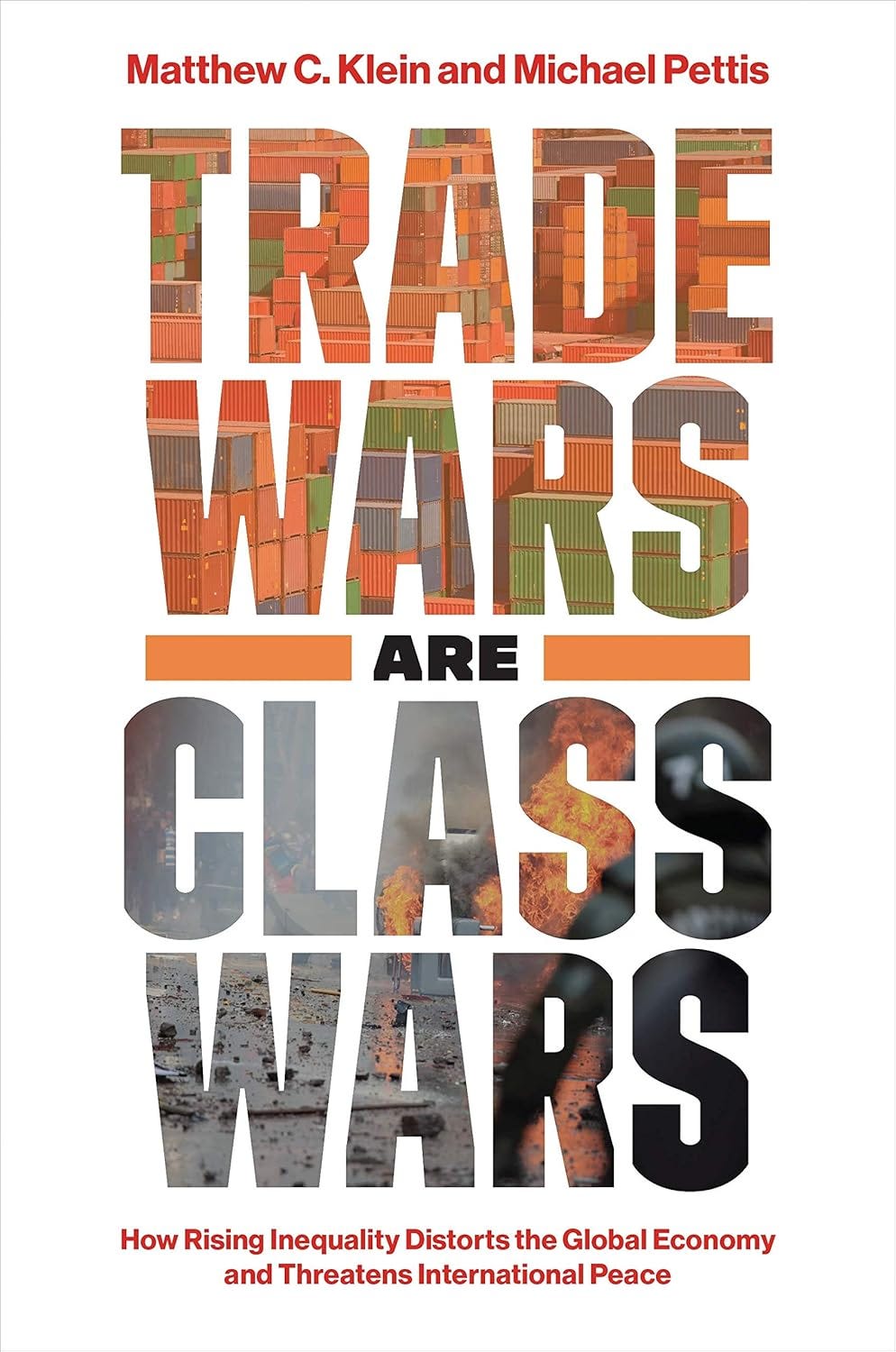
About the Book:
Trade Wars Are Class Wars flips the script on global economics. Matthew C. Klein and Michael Pettis argue that the root of trade imbalances isn’t clashing nations, but internal inequality.
When elites in countries like China and Germany earn more than they spend—while workers earn too little to consume—the result is excessive saving, surplus production, and the need to export the difference. With sharp analysis and deep historical context, the book reveals why fixing the global economy starts with rebalancing power at home, not abroad.
Our Take:
This book rewires how we think about trade. It’s not about flags or deficits—it’s about fairness. Klein and Pettis show that trade surpluses aren’t signs of success; they’re symptoms of suppressed wages. And deficits? Often the byproduct of inequality and underpaid labor.
What makes Trade Wars Are Class Wars stand out is its clarity. It connects Wall Street crashes, Chinese overproduction, and German wage stagnation into one coherent story: when workers can’t afford what they produce, someone else has to borrow to consume it. That’s the real imbalance. This book is essential reading for anyone thinking about the future of globalisation, economic justice, or the politics of prosperity.
Co-authored by Meenakshi Singh and Aswathi Prakash
Hope you liked today’s Policy Mandala!
We believe nation-building needs a community of changemakers—so we’re creating Bharat Mandala, an ecosystem for impact. Be part of our journey here!
Thanks for reading Policy Mandala! Subscribe for free to receive new posts and support our work.