
You flick the switch. The light comes on. The fan whirs. The fridge hums back to life.
It happens in a second. No ceremony, no thought. Electricity flows, invisibly — like it always has.
But what we don’t see is what it takes to make that happen. The coal burned. The smoke released. The sulphur in the air. The weight of every watt.
For most of us, that bargain feels distant. Until the headaches come. The breath shortens. The air turns bitter before the monsoon. And we wonder — wasn’t coal pollution supposed to go down? Didn’t we pass a law?
Well, we did. Back in 2015, India decided that coal power plants would need to clean up, specifically by installing Flue Gas Desulphurisation systems (FGDs) to cut sulphur dioxide emissions. It was a big moment. For the first time, we said thermal power couldn’t stay dirty forever. For once, clean air had a seat at the policy table beyond urban cities.
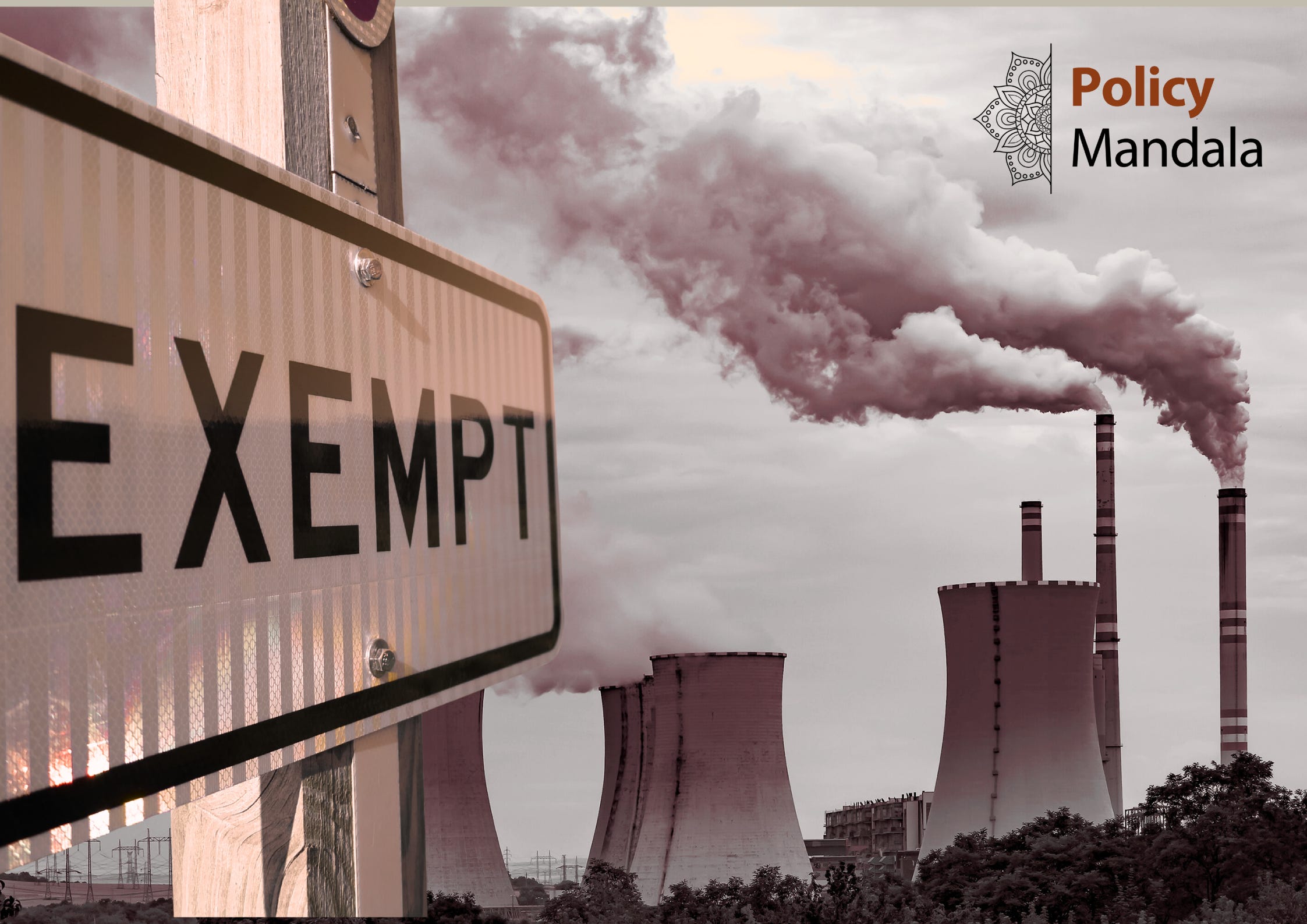
And then came July 2025. Quietly, through a government notification, 78% of India’s coal plants were given a pass. Just like that, they no longer needed to install FGDs. No filter. No fix. Just a legal nod to carry on as usual.
You see, India still depends heavily on coal to keep the lights on. Over 75% of our electricity still comes from thermal power. While that share dipped slightly — from 76% in 2010 to 72% in 2024 — overall electricity demand has exploded. Per capita consumption rose over 45%, from 957 kWh to more than 1,395 kWh between 2013 and 2023. So in real terms, we’re burning more coal than ever.
Which is why the July 2025 decision matters. And which is why, we’re talking about it in this week’s Policy Mandala. Because the decision can shape the air we breathe for years to come.
So what’s an FGD, anyway? It’s a pollution-control system that scrubs sulphur dioxide from coal emissions. That one compound — SO₂ — might not sound scary, but it’s the silent architect of PM2.5 particles, the fine pollutants that lodge in lungs, trigger asthma, cause heart disease, and travel hundreds of kilometres beyond the chimney.
Installing an FGD in just one 500 MW plant can stop over 1,000 tonnes of SO₂ from entering the atmosphere each year. To match that, we’d have to take 20,000 diesel cars off the road. Or stop crop burning across entire districts. That’s the scale of impact — and the promise we once recognised.
Which is why, in 2015, India tried to act. The mandate laid out deadlines for every plant based on age and location. But most missed them. By early 2025, less than 10% of India’s coal fleet had functioning FGDs. Enforcement was weak. Data was patchy. And so, instead of pushing for compliance, the government quietly rewrote the rules.
The official explanation? Indian coal is low in sulphur. Air near most plants is within “safe” limits. Water use goes up. CO₂ emissions rise only slightly. FGDs are expensive. And there aren’t enough vendors anyway.
But most of this rests on shaky ground.
One, the studies used to justify the rollback — from IIT-Delhi, NEERI, and NIAS — all acknowledge deep gaps in monitoring. Over 60% of plants don’t have continuous emission tracking systems. Several “compliant” regions had no baseline SO₂ data. In other words, we’re claiming it’s clean — without measuring.
There’s another truth hiding beneath the sulphur. While about 65% of exempted plants belong to public sector giants like NTPC — which supplies nearly a quarter of India’s electricity — several private operators also benefit. Groups like Adani, Vedanta, JSW, and Essar run older plants that have long delayed FGD compliance. Now, those delays have paid off. This isn’t just about pollution or cost. It’s about shielding both PSUs and powerful private players from penalties — and quietly writing off a decade of regulatory failure.
And the cost argument? Sure, installing FGDs costs ₹800–900 crore per large plant. But what about the cost of doing nothing? According to the State of Global Air 2023, India sees nearly 156 air-pollution deaths per 100,000 people — three times higher than the US, and far above even China. Much of this is due to PM2.5 exposure, with coal plants as major culprits. Children grow up with weaker lungs. Entire districts live with chronic illness.
So if cost is the reason for rollback, here’s the real question: what’s the price of inaction, and who’s paying it?
And then there’s the tariff story. FGDs raise generation costs by 15–16 paise per unit . For consumers, this could mean a 4–7% bump in electricity bills, depending on the state. So we either pay a little more in rupees, or keep paying with our lungs.
But before people could even choose for themselves, the government made the decision for them. With elections around the corner and discoms already struggling, price hikes are a political no-go. So instead of fixing the system, we exempted it. A temporary escape, dressed as reform.
And here’s what that escape will cost us.
The 78% of exempted plants are mostly located in rural and semi-urban India — in Chhattisgarh, Jharkhand, Odisha, Madhya Pradesh, parts of Maharashtra and Telangana. These are regions with poor monitoring, fragile ecosystems, and already stretched health systems. The pollution won’t stay local either. Atmospheric modelling shows SO₂ and secondary PM can travel up to 200 kilometres — emissions from Korba could drift into cities like Nagpur or even Varanasi.
And all this while India is trying to position itself as a clean energy leader.
Yes, we’ve pledged to reduce coal dependence. We’ve made global commitments under the Paris Agreement and COP summits. We’ve electrified over 280 lakh homes under Saubhagya. We’re pushing for electric vehicles, electric cooking, and 24x7 digital access. But the bottom line remains — we’re not cutting pollution, just shifting where it comes from.
And while other countries are upgrading, we’re stepping back.
China, with a thermal-heavy energy mix, installed FGDs in over 95% of its coal plants before 2015. The EU didn’t just mandate FGDs, it tied compliance to carbon pricing, created real-time pollution dashboards, and made emissions a matter of public accountability. Even South Africa, with all its constraints, has made SO₂ limits non-negotiable for new plants.
So the big question is: what should we have done instead?
Well, here’s what we suggest:
First, move beyond static zone-based exemptions and adopt a dynamic, real-time approach to prioritising FGD enforcement. Plants should be required to install FGDs based on real-time pollution levels, ecological vulnerability, and health risk — not outdated administrative maps. Use actual AQI data, satellite imagery, and pollution modelling.
Second, reward compliance. Offer longer-term power purchase agreements, priority dispatch in load order, or performance-linked incentives. Cleaning up should come with benefits.
Third, offer capital subsidies or input tax breaks for FGD installation, especially for older but efficient plants. We do this for solar and wind. Why not for clean air?
Fourth, make pollution visible. Every thermal plant should be required to install and maintain real-time emission monitors. The data should be public. If power plants affect our air, we have a right to know.
Finally, accelerate the phaseout of ageing coal plants. Units older than 25–30 years that operate below efficiency benchmarks or lack modern pollution controls should be retired in a time-bound manner — paired with investments in cleaner base-load alternatives like pumped hydro, round-the-clock renewables, and grid-scale storage. This won’t just clean the air — it’ll modernise the grid.
Because here’s what this is really about.
It’s not just about SO₂. Or FGDs. Or one rollback.
It’s about making sure no child grows up thinking dirty air is normal. About whether clean energy means cleaner lives or just cleaner headlines.
But none of it will change unless clean air becomes political.
As long as it stays off the ballot, governments will keep choosing polluters over people and expect us to live with it.
So what do we do when silence becomes policy?
And how do we build an energy future that doesn’t trade off health for electricity?
We talk.
The team behind Policy Mandala has launched a 4-month policy program for professionals, the Policy Pioneers Program, in collaboration with IIM Raipur and the Public Systems Lab at IIT Delhi.
Know more about it here.
Book Mandala
In this section, we suggest a book to be read/listened to each week, for the inner policy enthusiast in you :)
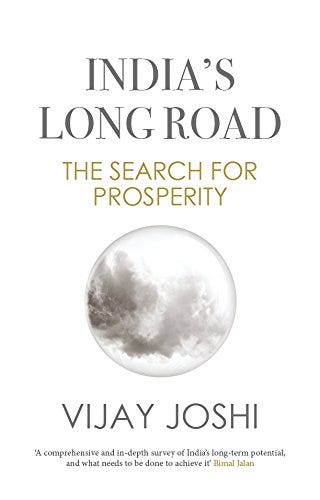
Book: India’s Long Road
Author: Vijay Joshi
About the Book:
In India’s Long Road, economist Vijay Joshi offers a lucid and sharp-eyed analysis of what it will take for India to achieve sustained, equitable prosperity. While the book covers a wide spectrum from fiscal reform to social spending, it doesn’t shy away from the thorny dilemma of coal and energy.
Joshi argues that India’s growth path must confront its environmental contradictions head-on, especially its dependence on coal and the governance failures that prevent a shift to cleaner alternatives. With data-driven insight and policy realism, the book situates India’s energy future within its larger development story.
Our Take:
This is essential reading for anyone tracing India’s energy policy crossroads. At a time when clean air and coal transitions hang in the balance, Joshi’s work reminds us that prosperity and sustainability are not parallel tracks—they must converge. Policymakers and readers alike will find clarity in his unflinching, economically-grounded vision of India’s long and winding energy road.
Co-authored by Mrinal Rai and Aswathi Prakash.
Hope you liked today’s Policy Mandala!
We believe nation-building needs a community of changemakers—so we’re creating Bharat Mandala, an ecosystem for impact. Be part of our journey here!
Thanks for reading Policy Mandala! Subscribe for free to receive new posts and support our work.
Thank you for writing this. This is deeply concerning. I ended up doing a deep dive on this and the report which forms the basis of the policy decision is contradictory and problematic. More on this here: https://energyandcleanair.org/from-scientific-evidence-to-excuses-neeri-and-nias-reports-undercut-fgd-policy-with-contradictions/