
Below, we discuss three recent policy updates from the past week(s), and analyze them for you: From the US election to the PM Internship Scheme and the DA hike. Let’s go!
Analysis #1: US Election 2024: What a Trump Comeback Could Mean for India

With the US votes still being counted and Trump achieving substantive victory, it’s a good time to break down what another Trump presidency might mean for India. Here’s a quick look:
Same Playbook, Different Team
US foreign policy, regardless of party, sticks closely to national interests. A strong India aligns well with those, so while Trump brings his own flavour, the big picture for US-India ties is unlikely to shift.A Trump Push for (Sort of) Peace
Trump claims he wants to cut military expenses on foreign wars, and if he manages a peace deal for ongoing conflicts like the Ukraine-Russia War, it could mean fewer international tensions—a stable world is always a plus for India, especially as India depends on Ukraine and Russia for important imports.Middle East Diplomacy & Trade Routes
Trump could push deeper ties with the Middle East. If he builds on the Abraham Accords that he negotiated in his last term, this might speed up the India-Middle East-Europe Corridor (IMEC)—a crucial trade route connecting India to Europe via Israel and the UAE.Unpredictability Returns
The past few years have been geopolitically predictable in US responses, but Trump’s unpredictability might keep India on its toes, especially with tariffs, trade deals, and climate commitments. A diplomatic “keep an eye out” moment for India’s policymakers.Tilting Manufacturing Towards India
Trump’s anti-China stance might open new manufacturing opportunities for India. His opposition to China-backed, cheap labour countries could steer business toward India, if he ramps up pressure on hubs like Cambodia and Vietnam.Spotlight on Hindu Representation?
Trump’s recent tweet supporting Bangladeshi Hindus, and vocal support from figures like Vivek Ramaswamy and Tulsi Gabbard, suggests the potential for stronger US advocacy on Hindu issues—a point of interest for the Indian diaspora.Technological Sovereignty: Starlink Push?
Trump’s electoral victory means a stronger Elon Musk. It may also mean the US is trying to push Indian Policymakers to ease Starlink’s entry into broadband or Tesla’s entry into EV markets. This will impact India’s tech sovereignty.
Skilled Migration
While tough on immigration, Trump’s policies have generally favoured skilled migration. Indian professionals and students are unlikely to see drastic changes here, regardless of political noise.
And as for Trump and Modi? Their camaraderie could mean easier, more direct conversations on trade, defence, and technology, leaving less space for the American ‘Deep State’, and improving transparency.
With the final election result out, the future of India-US relations remains certain, with nuances varying! Till then, enjoy the election memes on social media: Laughter Guaranteed!
Analysis #2: PM Internship Scheme Goes Live: Game-Changer or Just Another Patch?

Earlier this year, India’s Finance Minister set the stage for what looked like a golden opportunity for young professionals: a new internship scheme offering “real industry experience” through year-long placements with India’s top companies.
The plan? 1 crore internships over the next 5 years for youth aged 21-24.
And in the last month, the pilot went live, with 1.25 lakh internships launched in sectors from energy and finance to travel and automotive. But while this sounds promising, there’s a lot to unpack when it comes to students, companies, and the government.
What This Means for Students
Skills and Employability: What’s the Real Deal?
For students, the scheme promises hands-on experience, but it’s likely many of these roles will be entry-level, like tele-calling or shop-floor work. While any exposure helps, without structured skill development, will these roles actually boost long-term employability? Without more oversight, students might get only a quick taste of “working life” with limited career growth.Is ₹5,000 Enough to Survive On?
Interns will receive a ₹5,000 monthly stipend—decent but hardly enough in most urban areas. This could limit accessibility for young people from diverse backgrounds. A higher stipend might attract a broader applicant pool, but for now, it’s modest at best.
What does it mean for the corporates?
Can Companies Absorb So Many Interns?
With a target of 1 crore internships over five years, each top-500 company would take on roughly 4,000 interns annually. For companies like CRISIL and Dalmia Bharat, which have fewer than 6,000 employees total, this would mean nearly doubling their workforce. Larger companies like Maruti Suzuki and ITC would also need major staff increases of 33% and 16%, respectively. Is this a beneficial workforce boost or a logistical stretch?Impact on CSR Budgets: Is This Sustainable?
Companies will cover training and management costs through their CSR budgets, potentially diverting funds from NGOs and grassroots initiatives that rely on CSR. This may divert ~400-1000 Crores of CSR money into the internships, considering an expenditure of 2-5 thousand, per intern, per month. While this benefits interns, this also drains funds from other development work. Is it worth the trade-off?
What This Implies for the Government?
Privatising Skill Development with Government+CSR funds?
Companies have clear goals—creating products and driving profits, not necessarily training. Some argue this scheme reflects the National Skill Development Corporation’s limited success, essentially pushing the private sector to fill the skill gap.Indirect DBT?
Is this internship scheme simply indirect financial support for young people, with a side of work experience? If it’s a form of DBT (Direct Benefit Transfer), will doing direct support be better than a complex internship structure?
The Bigger Picture: Great Vision, but Execution is Key. The PM Internship Scheme is ambitious, but it hinges on companies delivering quality training and students gaining real skills.
The pilot phase will reveal if this is a bridge between education and employment or a short-term solution. Let’s hope it goes beyond politics and genuinely addresses job growth. We’ll keep tracking the rollout to assess the impact on India’s workforce—and on the companies taking on this responsibility. Stay tuned!
Analysis #3: DA Hike Alert: Why Government Employees Always Beat Inflation

In the last few weeks, the central government announced a hike on Dearness Allowance (DA), quickly followed by almost all states. But what exactly is DA?
DA is an allowance given to all central and state government employees to shield against inflation. This allowance is updated twice a year and is benchmarked against the inflation data available every six months. Adjustments also vary based on whether you live in urban, semi-urban, or rural areas, to better meet local living costs. To put this in perspective, let’s understand the three-fold system of pay increases for government employees:
DA adjustments, aimed at tackling inflation, are announced in March and September, typically increasing 2–5% of basic pay. This inflation buffer means government employees don’t feel the pinch of rising costs as much as others.
Pay Commission revisions, aimed at aligning government jobs with other sectors, bring major upgrades every decade, often ranging from a 20–50% salary bump. The last revision was in 2016, and the next Pay Commission is expected soon.
Promotions in the public sector bring role upgrades but are less frequent due to rigid hierarchies. A typical government employee may only see 2–6 promotions over a 30- to 40-year career.
Together, this trio of DA, Pay Commissions, and promotions keeps government salaries strong, even as inflation rises. Compare this with the private sector, where raises are generally annual, averaging 6–8% for senior roles and 10–12% for early-career professionals—with much more variation based on individual, team, and company-wide performance.
Even though modern performance metrics and skills-based salary mapping exist, government salary hikes are still applied equally, with no link to individual or team performance. Is it time to introduce a performance-linked component?
A blended pay structure that integrates inflation adjustments with performance-based incentives can provide stability and drive accountability. Although steps have been taken, such as the PM Excellence Awards recognizing exceptional civil servants (non-monetary recognition), some Public Sector Undertakings (PSUs) adopting limited performance-linked pay for senior roles under the 7th Pay Commission, and the appointment of a Secretary for Performance Management at the Cabinet Secretariat level (between 2009 to 2014), these efforts are diffused and lack consistent implementation across all levels. A full-fledged implementation of performance management and tracking could reward high performers, boost efficiency, and make public sector roles more dynamic.
While these programs are promising but need to be scaled nationwide and connected to individual pay structures. A systematic and transparent framework remains the need of the hour to build an agile, motivated, and accountable public workforce.
To thrive, India must rethink pay structures that reward performance and inspire progress. A balanced approach could bring stability and fairness to our workforce, paving the way for a more dynamic and equitable system for all.
Let’s hope that day comes soon, and while we wait, let’s continue working to improve the system.
Book Mandala
In this section, we suggest a book to be read/listened each week, for the inner policy enthusiast in you :)
Book: China in Ten Words
Author: Yu Hua
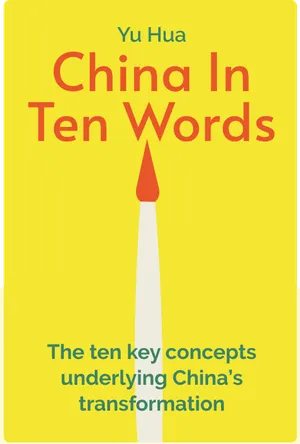
About the book: In China in Ten Words, celebrated author Yu Hua presents an intimate, unfiltered portrait of modern China through ten keywords that define its social, political, and cultural landscape.
Blending personal memoir with sharp social critique, he reflects on China’s rapid transformation—from Mao’s era to today’s economic powerhouse—revealing the resilience, contradictions, and challenges faced by its people. Through themes like “People,” “Leader,” and “Disparity,” Hua offers a nuanced exploration of Chinese identity, showcasing the complexities behind its global rise. This book provides a unique, insider’s perspective, making it an invaluable guide to understanding China from the ground up.
Our Take: If you're aiming to understand China authentically, China in Ten Words should be your first choice. Yu Hua’s writing is accessible, yet profound, offering a cultural lens to navigate China’s intricate social fabric. From the values shaping everyday life to the forces driving its global ambitions, Hua covers it all. This is an essential read for anyone tracking China’s journey—written by someone who has lived it and offers us his perspective with clarity and depth.
Hope you liked today’s Policy Mandala!
We believe nation-building needs a community of changemakers—so we’re creating Bharat Mandala, an ecosystem for impact. Be part of our journey here!