
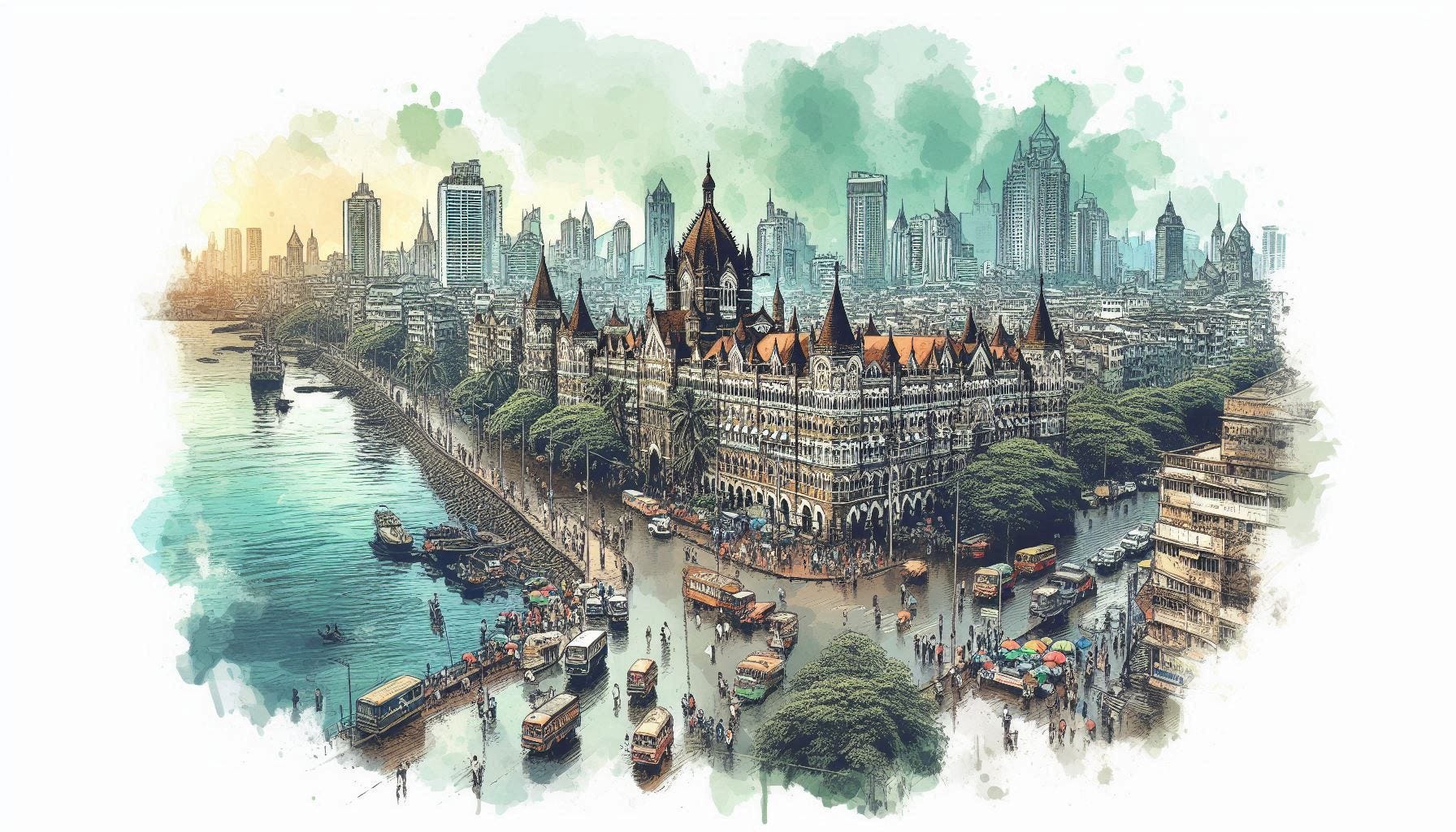
Mumbai goes to the polls today. Across its suburban region, 26 seats are up for grabs with around 250 candidates fiercely contesting on November 20. The air is buzzing with poll promises: direct cash transfers for women, slum redevelopment, new water connections, free education, affordable housing, and ambitious road projects. Each candidate is vying to capture the imagination of voters in what many are calling one of the most complex elections in Maharashtra’s history.
Yet, conspicuously absent from any manifesto is a clear focus on Mumbai's pressing climate crisis. This is no small oversight. Mumbai, traditionally celebrated for its financial institutions, Bollywood glamour, towering skyscrapers, and iconic beaches, is now synonymous with annual floods, deteriorating air quality, and rising sea levels threatening to submerge significant parts of the city.
In just two decades, Mumbai's population has doubled from 9.9 million in 2001 to over 20 million today (Ref: Climate Central). This staggering growth, coupled with global warming, has compounded environmental challenges. Over the last decade, the city has faced relentless flooding, poor air quality, and a surge in diseases like tuberculosis, dengue, and respiratory ailments. Areas like Kurla, Andheri, and Dadar are now notorious for waterlogging during monsoons, with lives and livelihoods disrupted every year (Times of India). Meanwhile, air pollution in industrial suburbs like Chembur and Powai has led to skyrocketing cases of respiratory illnesses, with families spending thousands on healthcare. According to the Praja Foundation, diabetes, major respiratory diseases, and hypertension are now among the leading causes of death in Mumbai, exacerbated by environmental degradation (Praja Foundation).
The future looks even grimmer. If current trends persist, projections suggest that 80% of South Mumbai could be underwater by 2040 (Das, A., Swain, P.K.), while the rest of the city grapples with rising pollution levels, increased vulnerability to extreme weather, and a growing public health crisis.
Despite these stark warnings, major political parties have offered no meaningful climate action plans in their manifestos. Zero. This glaring omission speaks volumes about the state of political priorities.
For comparison, European voters are increasingly prioritizing climate change. A recent Euronews poll across 18 countries found that 52% of respondents ranked climate action above all other issues. Initiatives like the European Green Deal have become central to election campaigns. But India, unfortunately, has yet to foster a similar cadre of “climate voters.”
Here, the so-called "brown agenda"—basic needs like food, shelter, sanitation, and employment—still overshadows the "green agenda." The immediate urgency of survival drowns out long-term discussions on sustainability. Climate issues, while critical, are often seen as abstract and distant by voters, and therefore, fail to grab political attention.
Ironically, election campaigns themselves worsen Mumbai’s environmental crisis. If each constituency deploys an average of 500 vehicles for campaign activities over a month—each consuming 15 liters of fuel daily—an estimated 60 lakh liters of fossil fuel will be burned. This translates to 130 lakh kilograms of CO2 emissions. Offsetting this would require over 5 lakh trees, highlighting the campaign’s environmental toll.
Still, Mumbai is not entirely without hope. Initiatives like the Coastal Road Project and the expanding Mumbai Metro network aim to reduce congestion and vehicle emissions. The state’s Electric Vehicle (EV) policy, coupled with BEST’s goal of a fully electrified bus fleet by 2027, is a positive step. Waste-to-energy projects and improved waste segregation under the Swachh Bharat Mission have also laid the groundwork for more sustainable urban practices (Iqbal Singh Chahal ).
However, these efforts remain piecemeal and insufficient to address the larger climate crisis. Mumbai’s green spaces are critically limited, covering less than one square meter per person—far below global urban standards. While the city’s rejoining of the C40 Cities network in 2020 was a step forward, tangible outcomes like climate-resilient infrastructure and restored ecosystems remain largely aspirational.
Mumbai, as India’s financial capital, has the resources, talent, and influence to lead the charge on climate action. But this requires an urgent recalibration of priorities. Survival is no longer optional—it demands collective action. Political leaders, civil society, businesses, and citizens must converge on a robust, actionable plan to transition the city toward climate resilience.
Unfortunately, Mumbai’s identity as a hub of Bollywood and finance often obscures its deeper vulnerabilities. The glamour of the film industry and the city’s economic clout distract from urgent issues like poverty, environmental degradation, and the public health crisis fueled by climate change.
For now, climate change remains a footnote in Mumbai’s elections, a stark reminder that India’s political landscape has yet to fully embrace the green agenda. Until voters demand otherwise, Mumbai will continue battling rising waters and polluted air with outdated priorities.
It’s time for a wake-up call. Mumbai’s future depends on it.
About the Authors:
Shradha is an architect by education and is currently pursuing an advanced certification course in Sustainable engineering and smart cities from IISc, Bengaluru. She is also working with Sewa International USA.
Kumar Subham is a social entrepreneur and policy professional. He holds a BTech from IIT Delhi and curates the weekly newsletter on Policy called Policy Mandala.

